


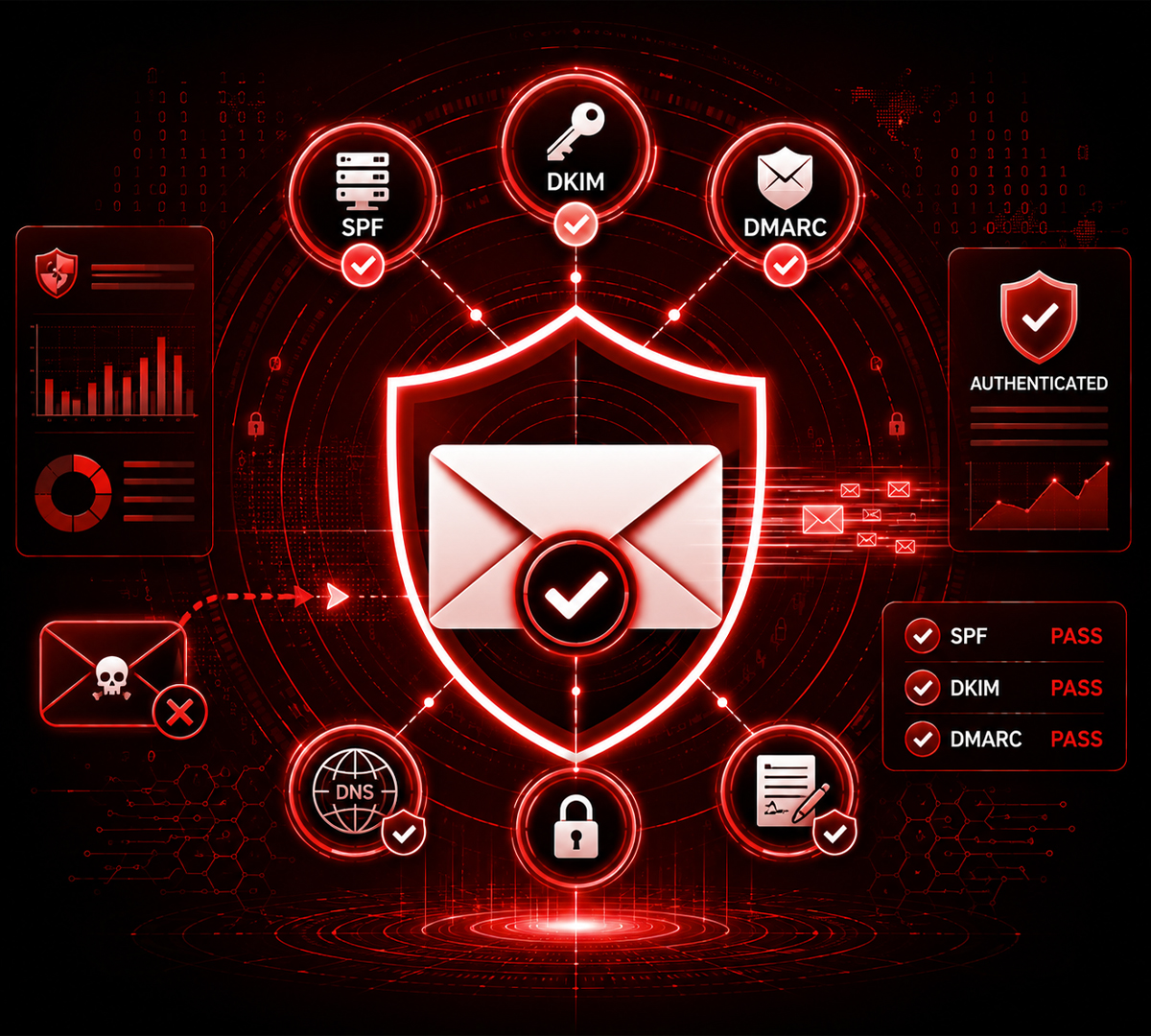

Email remains one of the most popular modes of communication among businesses; however, it is equally popular with hackers who carry out attacks such as phishing, spoofing, and impersonation. DMARC, which stands for Domain-based Message Authentication, Reporting, and Conformance, is a tool that organisations can use to secure their domain names.
With IDARK360, organisations can take a proactive approach to email security and strengthen protection against domain-based attacks.
Cyber attackers can spoof the domains of reputable organisations to make phishing emails appear legitimate. Such emails could be used to steal login information, spread malware, or even request money from users.
DMARC implementation as part of an overall security solution can assist organisations to:
IDARK360 enables businesses to take proactive measures to tackle these risks by incorporating email security into their overall cybersecurity strategy.
DMARC uses SPF and DKIM authentication results to determine whether an email is authorised to use a particular domain. Organisations can publish a DMARC policy that tells receiving servers whether to monitor, quarantine or reject messages that fail the required checks.
DMARC also provides reporting capabilities, allowing organisations to gain insight into email authentication activity. With IDARK360, security teams can use this type of visibility alongside other security measures to better understand potential threats and improve protection.
With IDARK360, organisations can take a proactive approach to email security and strengthen protection against domain-based attacks.
Cyber attackers can spoof the domains of reputable organisations to make phishing emails appear legitimate. Such emails could be used to steal login information, spread malware, or even request money from users.
DMARC implementation as part of an overall security solution can assist organisations to:
IDARK360 enables businesses to take proactive measures to tackle these risks by incorporating email security into their overall cybersecurity strategy.
DMARC uses SPF and DKIM authentication results to determine whether an email is authorised to use a particular domain. Organisations can publish a DMARC policy that tells receiving servers whether to monitor, quarantine or reject messages that fail the required checks.
DMARC also provides reporting capabilities, allowing organisations to gain insight into email authentication activity. With IDARK360, security teams can use this type of visibility alongside other security measures to better understand potential threats and improve protection.
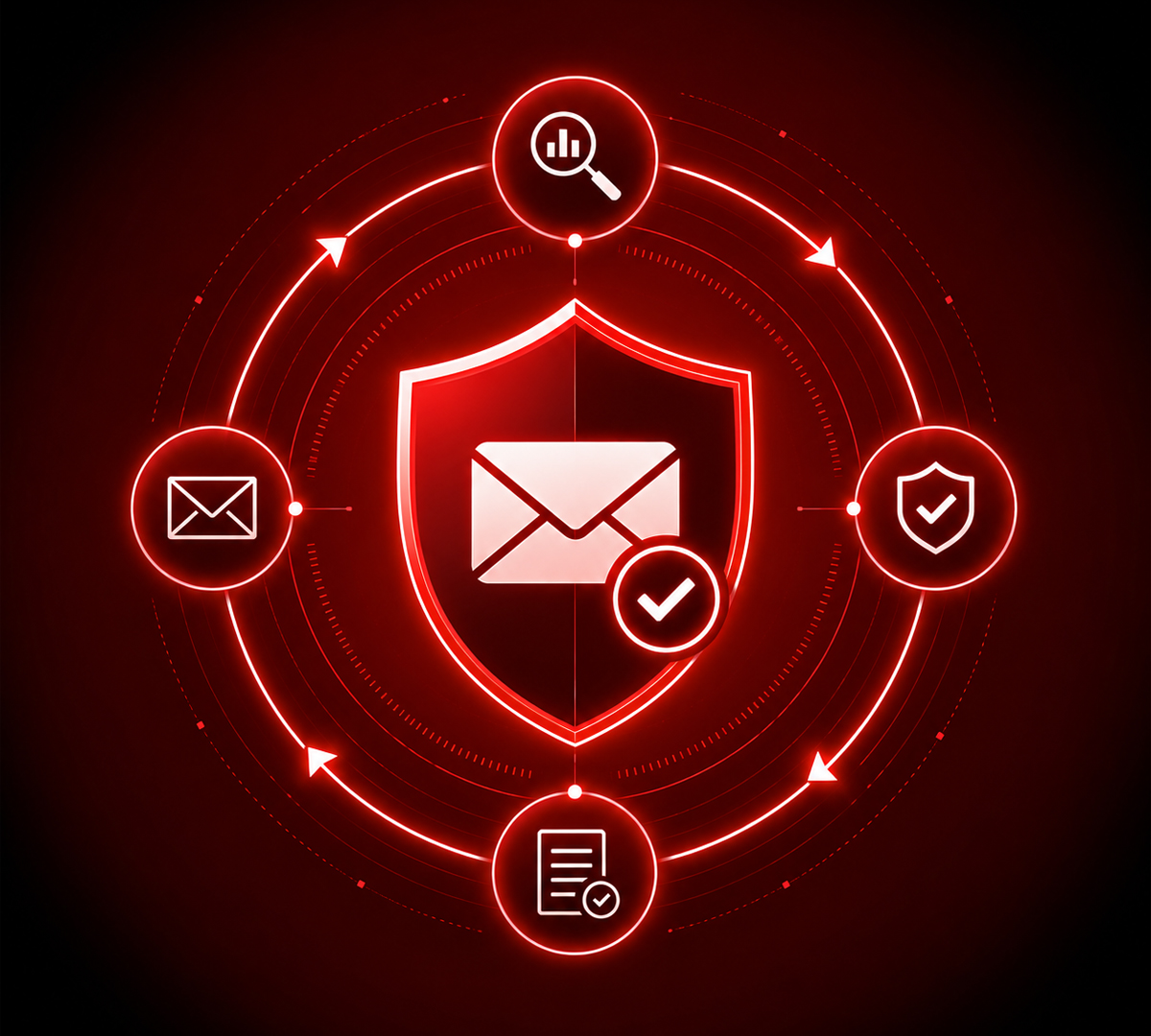
Email security requires more than a single configuration. Organisations need continuous awareness of authentication, phishing attempts, domain abuse and other potential attack vectors. IDARK360 supports a proactive cybersecurity approach designed to help organisations identify risks and strengthen their digital security posture.
Whether you are implementing DMARC for the first time or reviewing an existing email security strategy, IDARK360 can help you take a more security-focused approach to protecting your organisation's digital identity.
Whether you are implementing DMARC for the first time or reviewing an existing email security strategy, IDARK360 can help you take a more security-focused approach to protecting your organisation's digital identity.